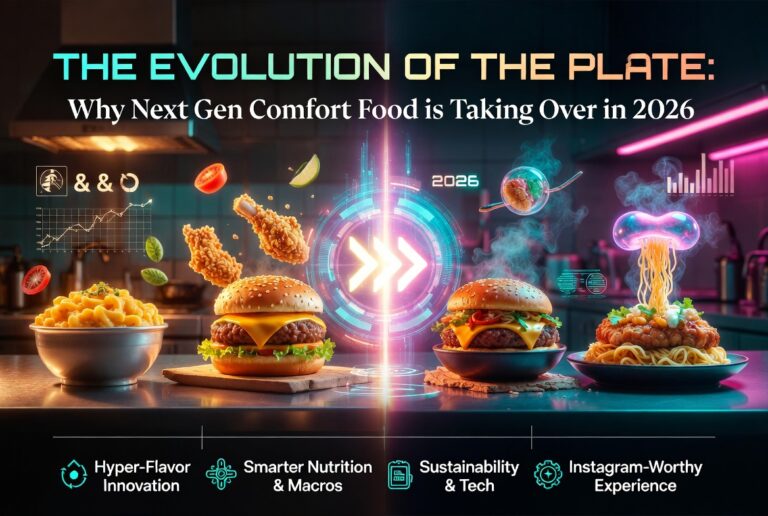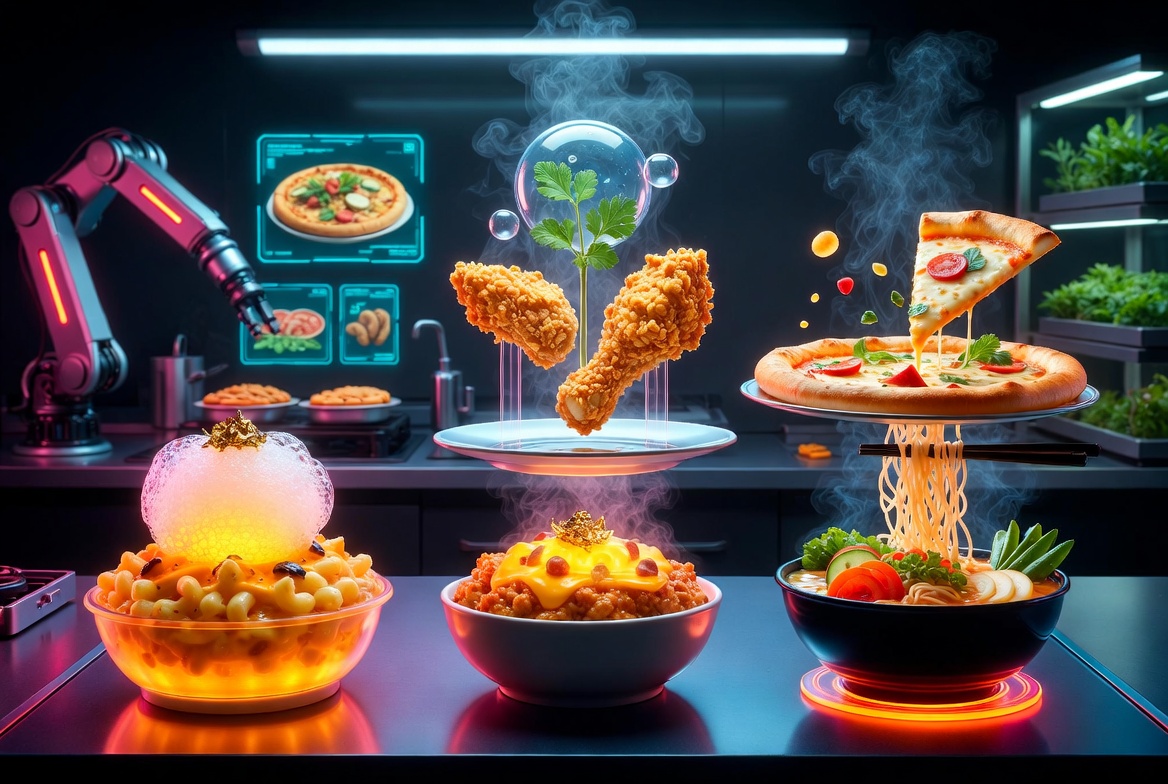
From fermented mac and cheese to plant-based birria, a new wave of chefs and home cooks is transforming the dishes we grew up loving into something altogether extraordinary.
There is something almost sacred about comfort food. The steam rising from a bowl of chicken soup, the satisfying pull of melted cheese on a grilled sandwich, the way a plate of mashed potatoes can make the hardest day feel survivable. Comfort food is not just fuel. It is memory, identity, and love expressed through heat and fat and salt. But something fascinating has been happening in kitchens across the country and around the world. A new generation of cooks, driven equally by nostalgia and curiosity, is asking a question that would have seemed almost heretical a decade ago: what happens when we make comfort food even better?
The answer, it turns out, is nothing short of a culinary revolution. Next gen comfort foods are not about tearing down the dishes we love. They are about honoring those dishes deeply enough to push them further, to ask what they could become if given access to global pantries, modern techniques, and a more expansive understanding of what comfort really means.
This is not fusion for the sake of novelty. It is evolution rooted in genuine affection for the original.
Why Comfort Food Is Having a Moment of Reinvention
The past few years have created the perfect conditions for this kind of culinary rethinking. Pandemic cooking forced millions of people back into their kitchens, many for the first time in years. People made bread, braises, and soups. They reconnected with the fundamental pleasure of feeding themselves and the people they love. At the same time, the internet was democratizing culinary knowledge in unprecedented ways. A home cook in Cleveland could learn fermentation techniques from a Japanese YouTuber, then apply them to a family cornbread recipe the next weekend.
Restaurant culture shifted too. Chefs who had spent years chasing Michelin stars and molecular gastronomy began returning to the food that had made them fall in love with cooking in the first place, but they brought all their hard-won technical knowledge with them. The result is a wave of restaurants where the menu reads like nostalgia but tastes like revelation.
Comfort food is the most honest food there is. When you improve it, you are not improving a dish. You are improving a feeling.
Beyond restaurants, social media has played an enormous role. Platforms like TikTok and Instagram have made it possible for a single upgraded recipe to reach millions of people overnight. The next gen cheeseburger, the reimagined ramen, the elevated grilled cheese: these dishes travel far and fast, inspiring endless interpretations and conversations about what makes food comforting in the first place.
The Building Blocks of Next Gen Comfort
Umami Depth and Fermentation
If there is one ingredient philosophy defining next gen comfort food, it is the relentless pursuit of depth. Traditional comfort food often achieves its richness through fat and salt. The new wave adds a third dimension: umami, that savory, lingering quality that makes food taste more fully like itself.
Fermentation is at the heart of this shift. Chefs and home cooks are adding miso paste to caramel sauces, incorporating gochujang into bolognese, and stirring fish sauce into tomato soups. These are not radical departures from tradition. They are enhancements that make the familiar sing louder. A roast chicken rubbed with miso butter does not taste Japanese. It tastes more deeply, almost impossibly, like roast chicken.
Mac and cheese has become one of the most adventurous canvases for this kind of exploration. Versions built on a base of aged cheddar and white miso, finished with a drizzle of chili oil and crispy breadcrumbs toasted in brown butter, are circulating food communities with near-evangelical fervor. The dish remains unmistakably mac and cheese. The soul is intact. But the flavor reaches further, stays longer, and satisfies more completely.
Global Pantries Meeting Local Tradition
One of the most thrilling aspects of next gen comfort food is the way it honors multiple culinary traditions simultaneously without erasing any of them. This is something quite different from the fusion experiments of the 1990s, which often blended cuisines at a superficial level, treating ingredients as exotic accessories rather than as products of deep food cultures.
Today’s approach is more respectful and more personal. Cooks who grew up eating both Southern American food and West African food are finding the natural bridges between those traditions rather than forcing artificial connections. The result might be a jollof rice baked mac and cheese, or a smothered pork chop that draws equally from soul food techniques and Taiwanese braising traditions. Neither dish erases the other. Both are enriched by the conversation.
Birria, the slow-cooked Mexican beef stew traditionally served at celebrations and special occasions, has become one of the most compelling examples of this cross-cultural comfort evolution. Plant-based versions made with jackfruit or mushrooms capture the deep, chile-spiced richness of the original while opening the dish to people who do not eat meat. The consomme, that brothy, crimson dipping liquid, remains. The ritual of dunking the taco remains. The comfort is entirely intact.
Five Trends Defining Next Gen Comfort Food
- Fermented and aged ingredients integrated into classic American recipes for greater depth
- Plant-based versions of traditionally meat-centered dishes that prioritize texture and technique over simple substitution
- Cross-cultural hybrids rooted in personal heritage and genuine culinary understanding
- Restaurant-quality finishing touches made accessible through widely available specialty ingredients
- Whole-grain and vegetable-forward versions of carb-heavy classics that do not sacrifice satisfaction
The Vegetable Revolution
Perhaps nowhere is the reinvention of comfort food more dramatic than in the treatment of vegetables. For most of food history in Western kitchens, vegetables in comfort food existed in supporting roles: the carrots in the stew, the celery in the soup, the peas stirred into the casserole. The protein was always the star.
That hierarchy is being overturned. And the results are extraordinary.
Cauliflower has become a kind of proving ground for this shift. Roasted at high heat until deeply caramelized and nearly charred at its edges, then dressed with tahini, pomegranate molasses, and fresh herbs, a single head of cauliflower can be as satisfying, as filling, as genuinely comforting as any roast chicken. The key is technique. Most people have spent their lives eating undercooked, under-seasoned vegetables and have never learned what a vegetable can actually taste like when it is treated with the same care and attention as a piece of meat.
Mushrooms, too, are undergoing a transformation. Braised in red wine and aromatics until silky and concentrated, king oyster mushrooms shredded and seasoned with smoked paprika and a touch of liquid smoke can deliver the kind of deep, savory satisfaction that sends people reaching for a second helping. This is not pretend meat. This is mushroom cooked to its absolute highest potential, which turns out to be very high indeed.
Legumes are getting the same treatment. White beans slow-cooked with garlic, rosemary, and good olive oil until they are creamy and almost falling apart, then served on toast with a shower of parsley and a squeeze of lemon, is one of the most comforting things a person can eat. It is also incredibly affordable, deeply nutritious, and satisfying in a sustained way that heavy meat dishes sometimes are not.
Technique as an Act of Love
What separates next gen comfort food from either traditional comfort food or trendy restaurant food is often not the ingredients at all. It is the willingness to apply genuine technical attention to dishes that have historically been treated as low-effort by nature.
Consider the grilled cheese sandwich. In its classic form, it is wonderful: butter, bread, cheese, heat, patience. The next gen version does not abandon any of those elements. Instead, it asks what happens when you use bread that has been properly fermented, when the cheese is a blend chosen for both flavor complexity and optimal melt, when the exterior is finished with a dusting of grated Parmesan that crisps and browns into a lacy, deeply savory crust. Same dish. Same fundamental pleasure. But elevated through attention to every single variable.
The same logic applies to mashed potatoes, arguably the most beloved comfort food in the American canon. The next gen approach might involve cooking the potatoes in salted water with a head of garlic and a few bay leaves, passing them through a ricer rather than mashing to achieve a silkier texture, then incorporating warm brown butter and creme fraiche instead of cold butter and milk. The result is mashed potatoes that taste so much more deeply like themselves that eating a spoonful can feel like a genuine revelation.
The best thing you can do for a classic dish is to understand it so completely that you know exactly where it has room to grow.
Comfort Across Cultures: A Richer Definition
One of the most important things happening in the next gen comfort food movement is a long overdue expansion of what comfort food is allowed to mean. For most of food media history in the United States, comfort food was implicitly coded as white American food: the casseroles, the meatloaves, the pot pies. Dishes from Black American, Latino, Asian American, and Indigenous communities were either ignored, exoticized, or repackaged for white audiences without proper attribution.
That is changing, slowly but meaningfully. Food writers, chefs, and media figures from those communities are insisting that their grandmothers’ cooking is comfort food too, that congee and egusi soup and pozole and fry bread carry exactly the same emotional weight as any pot of New England chowder, and that the same loving attention to evolution and improvement can and should be applied to those dishes on their own terms.
This is a more complete and more honest picture of what comfort food actually is. It is also, from a purely gustatory standpoint, an incredible gift. When the definition of comfort expands, so does the repertoire of ideas available to every cook who wants to explore it.
Home Cooks at the Center of the Movement
It would be easy to frame next gen comfort food as primarily a restaurant phenomenon, and certainly restaurants are playing an important role. But the most exciting energy is happening at home, in ordinary kitchens, among people who are not professional chefs and have no intention of becoming them.
The home cook who spent a pandemic weekend learning to make proper stock, who now uses that stock as the base for a pot of rice that turns out richer and more satisfying than anything they have eaten in a restaurant, is part of this movement. So is the person who grew up eating their grandmother’s collard greens and is now experimenting with adding a splash of apple cider vinegar and a piece of smoked turkey neck to deepen the pot likker in ways that feel simultaneously traditional and new.
These are not people trying to be fancy. They are people who love food deeply enough to keep asking what else it can be.
That curiosity is, perhaps, the single most important ingredient in next gen comfort food. It is not about technique or pantry or equipment, though all of those help. It is about caring enough about the food you love to study it, to question it, to take it apart and put it back together in a form that feels both true to its origins and open to the future. Comfort food has always been about love. Next gen comfort food is about what love looks like when it keeps learning.
* * *
The dishes that will define the coming years of comfort cooking are being invented right now in home kitchens and small restaurants, by people who grew up eating food that made them feel held, and who want to pass that feeling on, amplified, expanded, and made available to everyone willing to pull up a chair. That is not reinvention. That is inheritance honored in the deepest possible way.
About the Author