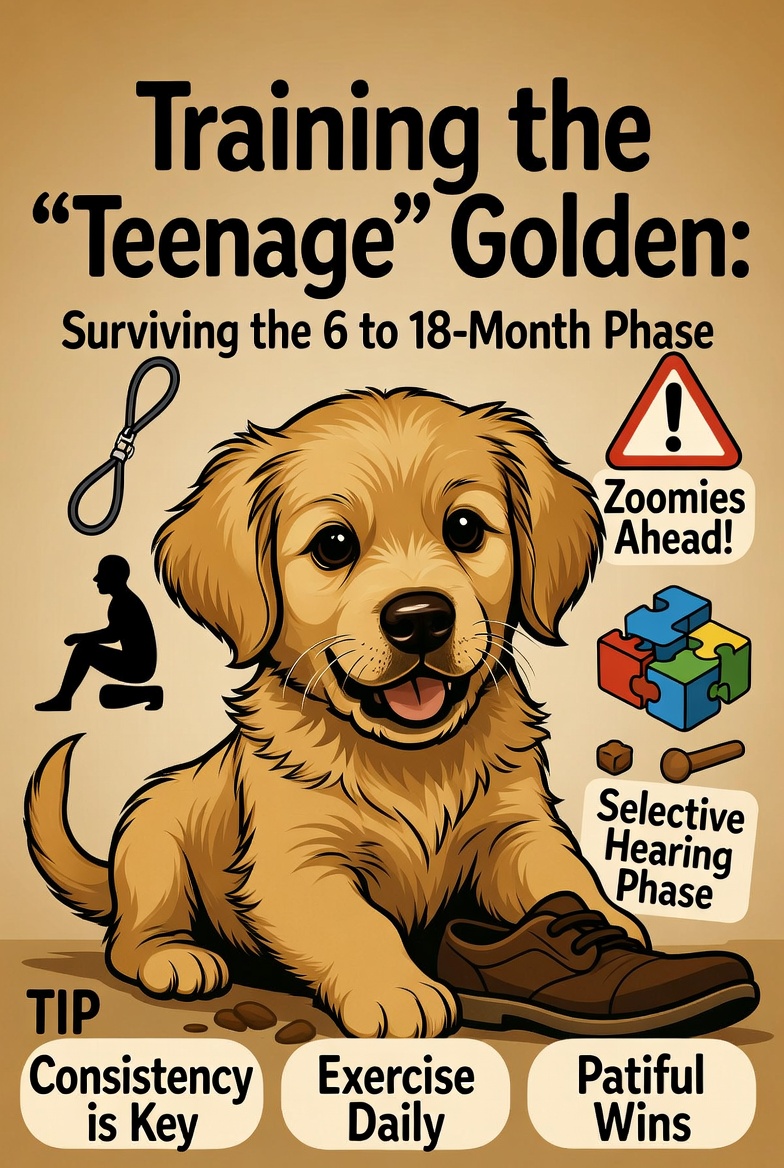
The Golden Retriever is often hailed as the perfect family dog. People envision a calm, regal companion lounging on the porch or a gentle soul that retrieves a tennis ball with soft eyes and a wagging tail. However, owners who have just graduated from the “cute puppy” stage into the six to eighteen month window often find themselves staring at a different creature entirely. This period is the canine version of adolescence. It is a time of leggy growth spurts, sudden selective deafness, and a surge of energy that can make even the most patient owner wonder where their well-behaved puppy went.
Understanding the biology and psychology of a teenage Golden is the first step toward surviving this phase. Between six and eighteen months, your dog is undergoing massive hormonal shifts and neurological pruning. Their brains are literally being rewired. While they look like adults, they lack the impulse control and emotional maturity that comes with full maturity, which for a Golden Retriever usually occurs around age three.
The Science of the Teenage Brain
During adolescence, a dog’s brain undergoes a significant reorganization. Research suggests that during this time, dogs may show a reduced response to their owners’ commands and an increased sensitivity to the environment. This is a survival mechanism rooted in their wild ancestry. As a young animal nears sexual maturity, they must explore the world beyond their immediate family unit.
For your Golden Retriever, this manifests as “selective hearing.” You might call them in the backyard, and instead of the immediate return you enjoyed at four months old, they look at you, look at a squirrel, and decide the squirrel is significantly more interesting. They aren’t being spiteful. Their brain is simply prioritizing environmental stimuli over social cues.
Managing the Physical Surge
Golden Retrievers are athletic dogs by design. In their teenage months, their bodies finally have the strength to match their curiosity. This is often when destructive behaviors peak. If a Golden is not physically and mentally tired, they will find their own “jobs” to do. Usually, these jobs involve deconstructing your favorite pair of leather boots or seeing how much stuffing is actually inside a sofa cushion.
Structure is your best friend during this phase. A simple walk around the block is rarely enough for a ten month old Golden. They require “decompression walks” where they can sniff and explore on a long lead, coupled with high intensity play like fetching or swimming. Because Goldens are mouth-oriented dogs, providing appropriate outlets for their “retrieval instinct” is vital. If they aren’t carrying a toy, they will likely try to carry your arm or the leash.
Re-Establishing the Foundations of Training
Many owners make the mistake of stopping formal training once a puppy finishes their first basic class at six months. In reality, this is when training should intensify. However, the approach must shift from teaching new tricks to proofing behaviors under distraction.
Focus on the “Big Three” of adolescent training:
1. Reliable Recall The “come” command often falls apart during the teenage phase. To fix this, stop calling your dog for things they dislike, such as leaving the park or getting a bath. Use high-value rewards that they only get when they come to you. If your Golden has started ignoring you, go back to using a long training lead. Never set them up to fail by calling them when you know they are too distracted to listen.
2. Impulse Control Adolescent Goldens are famous for “zoomies” and jumping on guests. Impulse control exercises, such as “Stay” or “Wait” before meals and at doorways, help strengthen the prefrontal cortex of their brain. Teaching a “place” command, where the dog must stay on a specific mat or bed until released, is a game-changer for managing household chaos.
3. Loose Leash Walking As they grow stronger, a Golden’s desire to greet every person and dog on the street can lead to frantic pulling. This is the time to invest in a high-quality front-clip harness or a head halter if necessary, but the real work is in the reward. Reward your dog for checking in with you and looking at your face while walking.
The Importance of Mental Stimulation
A bored Golden is a creative Golden, and you rarely like their creations. Mental exhaustion is often more effective than physical exhaustion for calming a rowdy teenager. Since this breed is highly food-motivated, use that to your advantage.
Ditch the food bowl and use interactive puzzles. Hide treats around the house for a “scent work” game. Goldens have incredible noses, and using them to find hidden items taps into their natural breed purpose. Spending fifteen minutes on a sniffing game can be as tiring for a dog as an hour of running.
Navigating Social Changes
Between six and eighteen months, you might notice changes in how your dog interacts with others. Some Goldens become more cautious or “spooky” during secondary fear periods. A trash can moved to a new spot or a person wearing a floppy hat might suddenly cause a barking fit.
It is crucial to remain calm during these moments. Do not force your dog to approach the object of their fear. Instead, let them observe it from a distance and reward them for remaining calm. Conversely, some adolescents become “frustrated greeters,” barking and lunging not out of aggression, but out of a desperate desire to play. Training them to remain neutral around other dogs is more important than ensuring they play with every dog they meet.
Health and Growth Considerations
During the 6 to 18-month window, your Golden is still growing their skeletal structure. It is tempting to take your high-energy dog for long runs on pavement or engage in intense jumping exercises to tire them out. However, excessive impact on developing joints can lead to long-term issues like hip or elbow dysplasia, which are common in the breed.
Consult with your veterinarian about the appropriate age for spaying or neutering. Recent studies specific to Golden Retrievers suggest that waiting until the growth plates have closed (often after 12 to 18 months) can have significant health benefits, including a lower risk of certain cancers and joint disorders. Every dog is an individual, so a professional medical opinion tailored to your specific dog is essential.
The Light at the End of the Tunnel
It is easy to feel overwhelmed when your once-sweet puppy is acting like a wild animal. Take heart in knowing that this is a temporary developmental stage. The work you put in now—the consistent boundaries, the patient redirection, and the daily mental puzzles—is what builds the foundation for the legendary adult Golden Retriever you’ve always wanted.
By the time your dog reaches two years old, the frantic energy begins to settle. The “zoomies” become less frequent, and the selective hearing starts to fade. You will find that the bond you forged during these difficult months is deeper because you navigated the challenges together.
The teenage phase isn’t a problem to be solved, but a season to be managed. Keep your sense of humor, keep a pocket full of high-value treats, and remember that behind that goofy, rebellious exterior is a loyal companion waiting to emerge. Focus on the small wins. One successful walk without pulling or one quiet evening on the “place” mat is a victory. Before you know it, the teenage “land shark” will be replaced by the noble, golden-hearted friend that makes all the effort worthwhile.
About the Author